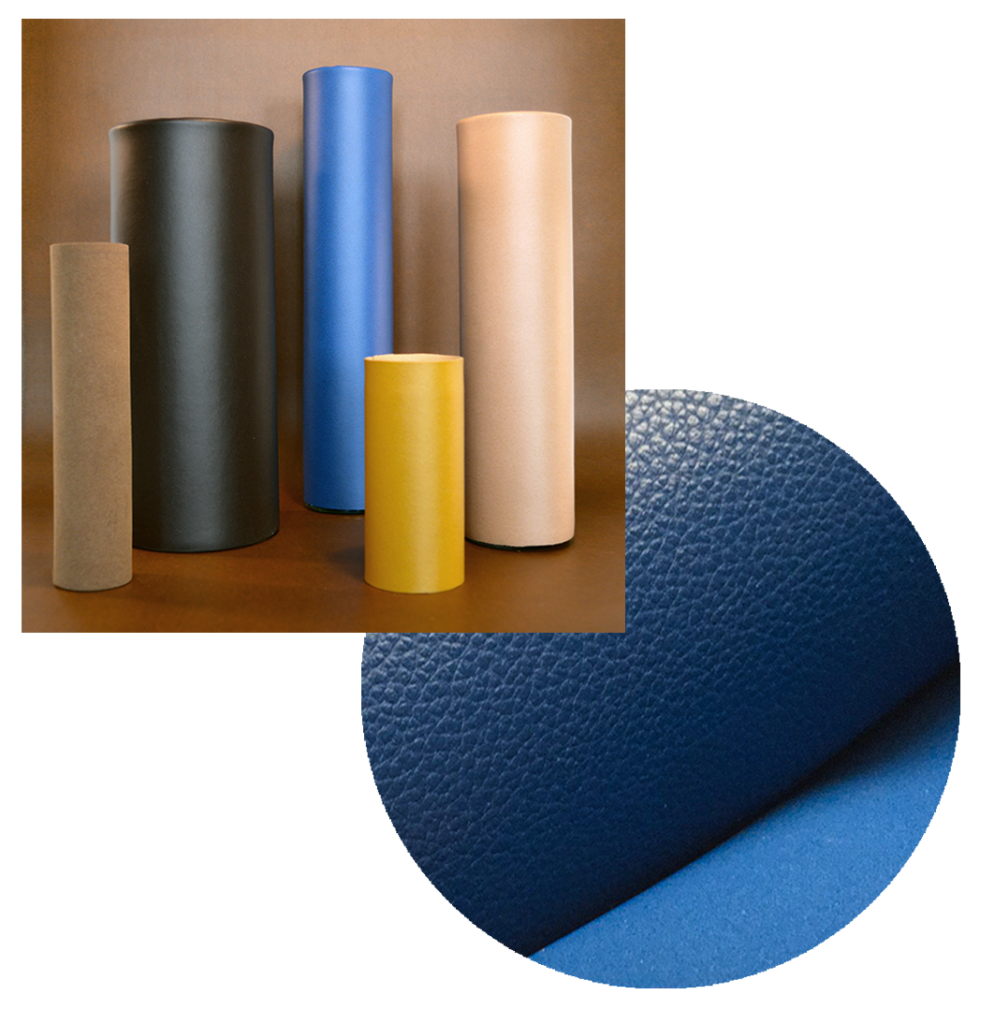
CORSKIN® It is the result of the convergence between material research, biomass valorization, and environmental respect. It stems from an advanced upcycling process that transforms cork waste into a flexible, durable, and technically high-performing surface - ideal for applications in fashion, product design, interior, and packaging sectors.
Feedstock
Renewable resources
The carbon-neutral material is composed of over 82% bio-based biomass derived from non-food plant polymers and regenerated Sardinian cork waste. Coming from other production sectors, it does not require further industrial processing and maintains excellent physical and mechanical properties.
CORSKIN™ fully harnesses the exceptional properties of cork’s honeycomb structure-a natural system of hexagonal microcells that gives the material its lightness, elasticity, and unique insulating capabilities. This structure, made up of millions of air-filled cells, allows CORSKIN™ to be extremely lightweight and compression-resistant, while maintaining flexibility and dimensional stability.
Sourced from local resources (Sardinia) and entirely produced in Italy.
Water saving
Sourced from the bark of self-regenerating trees, it requires no water for its growth or processing.
Strength
Cork is abrasion-resistant, and its honeycomb cell structure provides high impact resistance.
Durability
Cork has greater durability, its composition prevents degradation caused by atmospheric agents and fungal infections.
Honeycomb structure
Thanks to cork’s honeycomb structure, fewer additives are needed - helping to protect the environment.
Lightness (+10%)
10% lighter than other bio-based materials, with high breathability and low density.
ECO-FRIENDLY
Chemical Savings
It contains a lower amount of chemicals, with cork biomass playing a key role compared to other products in the same category already on the market. Thanks to the volume of cork, it requires a lower percentage of resins.
Corskin is designed to be a zero-mile material. Aligned with European CO₂ emission standards, the entire production process takes place in Italy—from the sourcing of raw materials to manufacturing—minimizing additional emissions from logistics and transportation (SCOPE 3).



 English
  Italian